By: Kai Ma
Article was Edited by: Terry Tian
Disclaimer: The opinions expressed in this article are the author’s own, and do not necessarily reflect the views espoused by The Lost Canadian.

As a Chinese-Canadian high school student months away from university applications, I’m certainly feeling some hopelessness at the moment. In light of the recent events regarding racial discrimination in higher education around the world, such as accusations against Yale University from the Department of Justice and the ongoing lawsuit against Harvard University, it is easy to react with outrage. In this article, I will share some of my thoughts on the issue, as well as look at some revealing data.
In any situation where systematic bias is supposedly present, as I believe there is, there should be concrete data serving as evidence for this systematic bias. By examining the data, we can evaluate the truthfulness of the claims against current post-secondary institutions. Sure, there are allegations that institutions of higher learning are discriminating against certain races. But how does the data support this? What are the specific mechanisms used by these institutions that can be perceived as discriminatory? This blog, will answer some of these questions.
Firstly, we can take a glance at the now-famous 2014 lawsuit: Students for Fair Admissions (SFFA) v. Harvard, which is still ongoing (some expect it to eventually reach the Supreme Court), especially because it is a well-known example of alleged discrimination and because a wealth of data is provided by the plaintiffs. In order to understand this data, we have to better understand the Harvard admissions system. Prospective freshmen are rated in four race-neutral “profile” categories: Academic, Extracurricular, Personal, and Athletic. A score between 1-4 is given to each student, with 1 being the best and 4 being the worst. Taking a look at the definitions for a “high” score (2 or higher) in the Personal category:
Personal: “A variety of ‘subjective’ factors,” including… “character traits”, “positive personality,” , … , “humor, sensitivity, grit, leadership, integrity, helpfulness, courage, kindness and many other qualities.”
1 – “Outstanding” personal skills
2 – “Very strong” personal skills
The remaining descriptors for each grade are similarly vague and unhelpful. Some examples are “bland” and “questionable”.
Some important and relevant conclusions from the data (United States District Court):
1- Asian Americans have the highest academic scores, being over represented in the 8th decile and higher.
2 – Academic and Personal scores are directly positively correlated, regardless of race.
3 – Asian Americans received less “high Personal scores” (2 or higher) in almost every academic decile compared to every other race. This was true for both the Personal score given by the Admissions Office and the score given by alumni interviewers. Generally, African Americans received the highest Personal scores, Hispanics being second, Caucasian being third, and Asian Americans coming in last.
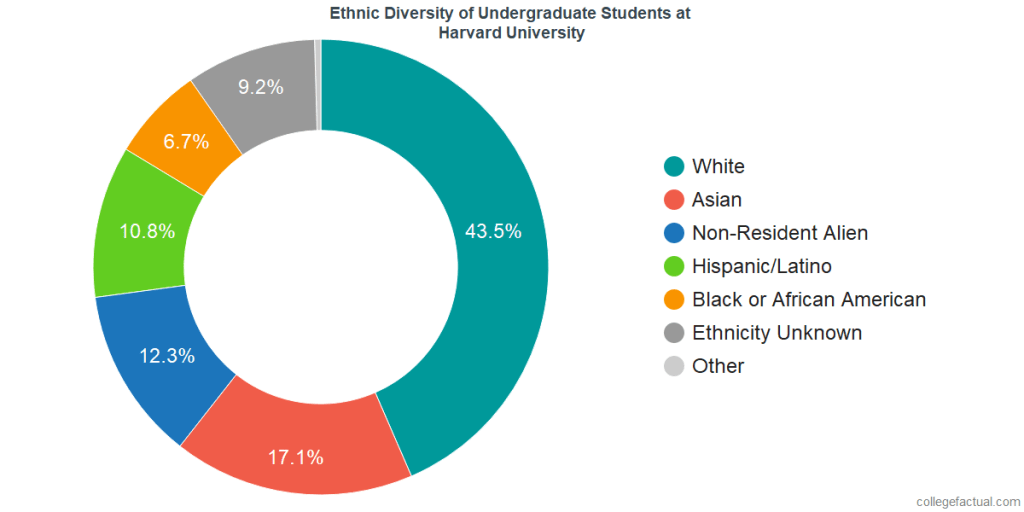
And now, I’ll make some wild, possibly uneducated speculations based on the data. To be clear, the rest of the article will mostly be my opinion, though some points will be backed by data. As an immigrant of ethnic Chinese origin, my viewpoint will certainly be biased.
For me, the crux of the issue seems to be the uncertainty of the definition of the Personal category. The wording on Harvard’s documents regarding this category is extremely vague, and much information remains redacted. Conclusion 2 above makes this “Personal” category even more mysterious. How are traits such as “sensitivity” and “kindness” going be be measured on an individual level through a written application?
From the conventional wisdom regarding college admissions personal essays, we can probably assume that the Personal score strongly relates to being “unique” or “interesting”, which also partially explains the fact that Asians get lower Personal scores, as more than a quarter of applicants are Asian American.
Although “unique” and “interesting” make the Personal category somewhat more specific, it can still be very vague, which can be problematic. For example, being “unique” can easily be related to a candidate’s socioeconomic status. I think it’s relatively easier to portray yourself as unique when you’re rich; you can afford to take a year-long trip around the world, you probably have the connections to get an internship at some prestigious corporation. Other characteristics such as extracurricular activities and sports are also much more readily available to the rich; students of lower socioeconomic status probably have significantly less options, most likely being limited to the activities offered by their school. This is compounded by the fact that rich private schools tend to offer scholarships for sports that are much more common in the upper class; golf, squash, fencing, etc.
However, this can also go the other way; students of lower socioeconomic status can recount stirring narratives of their endless struggles against poverty, showcasing their determination and tenacity.
But where does that leave the middle class, where most Asian Americans are?
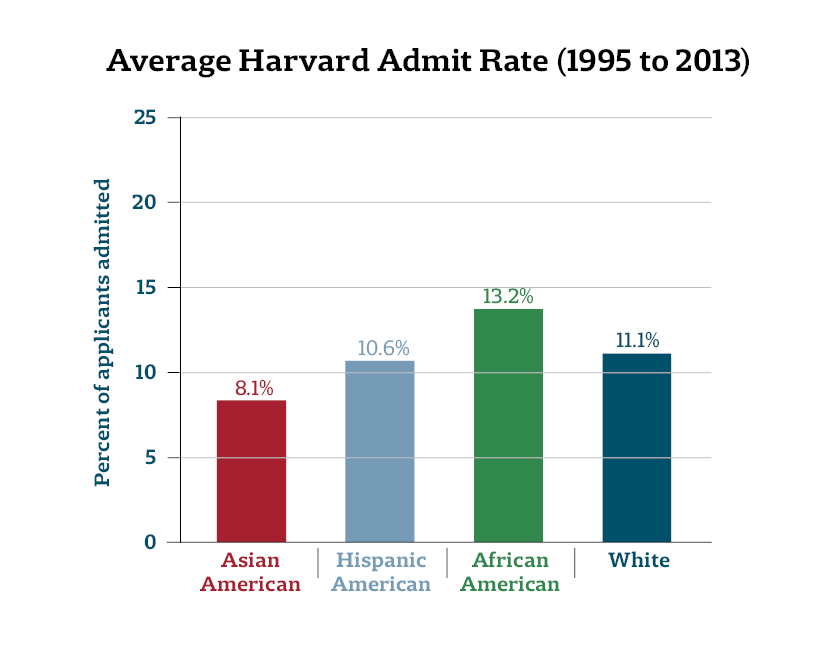
Asian American applicants are also less likely to be geographically “unique” – according to the data published by the SFFA, applicants of other racial origin, especially white applicants, are much more likely to come from rural areas and underrepresented states.
Moreover, the requirement of being “unusual” implies that if your profile is too similar to another candidate, you have no chance of getting in. Although the logic behind this is obvious (universities invariably want a diverse campus to provide a variety of different interesting viewpoints), I don’t think it can be considered fair. In college admissions, it seems that “Asian” mostly refers to East Asians, particularly Chinese Americans. This probably leads to South Asians being lumped together with East Asians, even though South Asian countries and East Asian countries are often immensely different, culturally speaking. South Asian Americans and East Asian Americans cannot be considered to be the same demographic at all, as South Asian Americans experience poverty rates higher than the national average and depend on welfare even more than other disadvantaged groups such as African Americans and Hispanics.
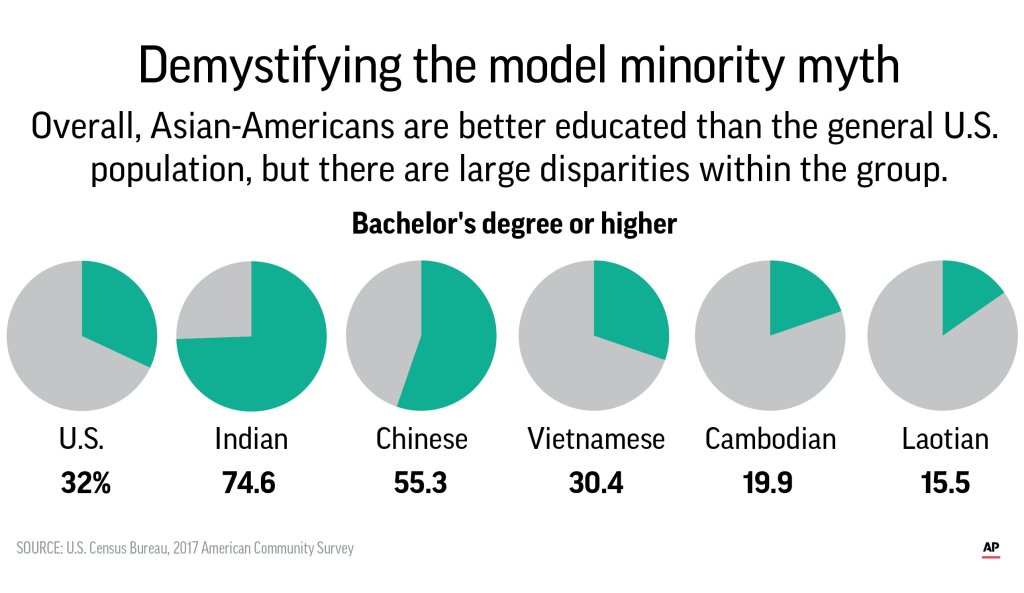
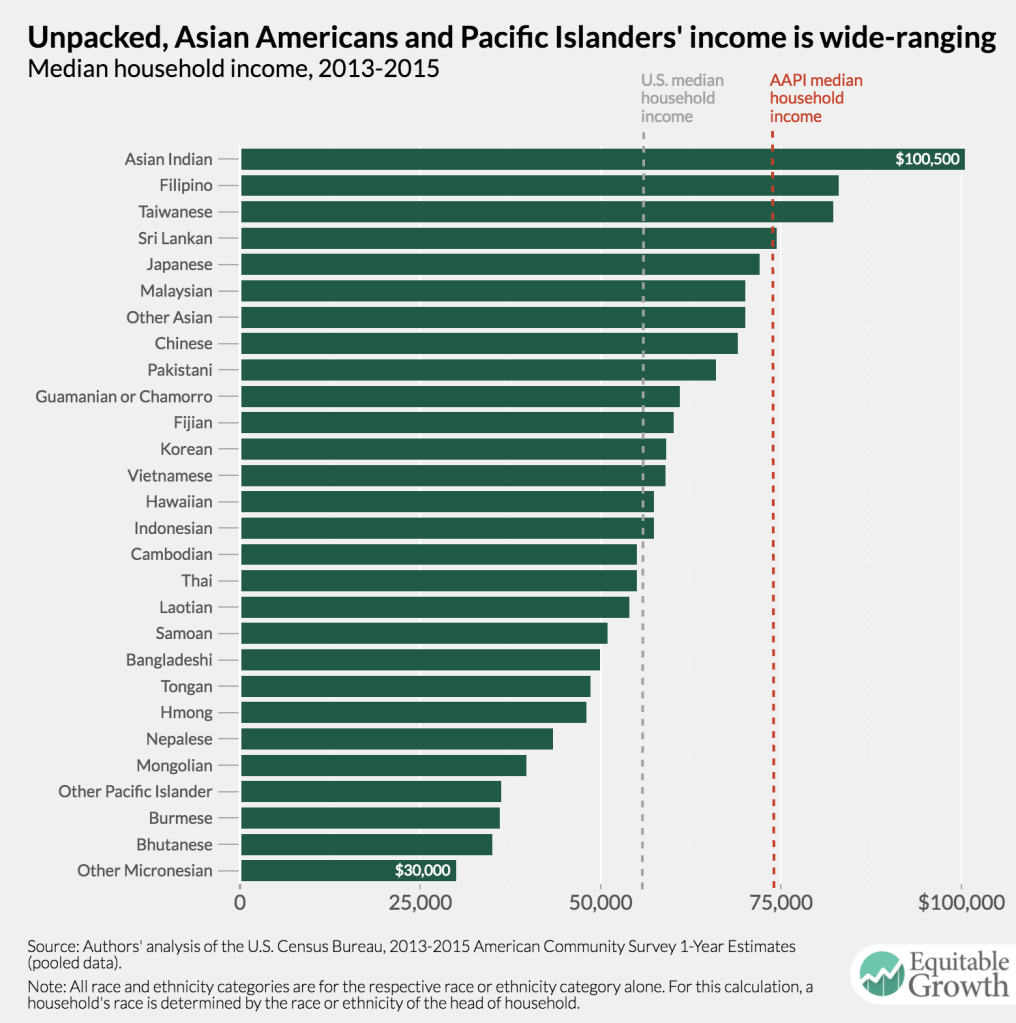
Another interesting thing that I found relating to being “interesting” and “unusual”:
Here, it seems that we are presented with a paradox.

Asian parents are perceived to fight hard for their kids. Immigrating from a different country, learning a foreign language, acquiring a job, getting their child into a good school, and encouraging extracurricular involvement. Somehow, these advantages are counted against Asian Americans. Should Asian American achievements be celebrated less because they don’t directly reflect natural, innate talent but hard work and parental engagement? I don’t think so.
It seems that Harvard believes that the underlying talent of a student is somehow hidden and corrupted by parental involvement and hard work. Does this not, in some way, seem counterproductive? It almost seems that they are actively telling parents to care less about their children and telling students to have no work ethic.
Keep in mind: the Personal score is meant to be race-neutral. There’s still more to come; another portion of the Harvard admissions process involves the Overall score, which allows race to be explicitly taken into account.
Does none of this feel wrong? Should we not feel outraged?
Yes, affirmative action is an important part of fighting against systemic racism, especially correcting for prejudices against the African American and Hispanic population. But why punish the Asian American population? After all, they’re also a minority, even if they’re a so-called “model minority” (though this is a harmful myth that is used to downplay the effect of racism on minority groups). And most perplexingly, why does it seem the white population is given more chances than the Asian American population?
In my view, affirmative action seems like an attempt to fix a cosmetic problem that is a symptom of a much deeper one. Affirmative action exists to correct the prejudices experienced by minority groups that allow them less opportunities on the path toward higher education. But the issue that affirmative action is trying to correct is a symptom of the discrimination that goes back for centuries. But in reality, it doesn’t really fix the problem; it simply makes it look like it’s fixed from a statistical viewpoint. It makes it seem that the world is becoming a more equal place because university admission numbers look nicer. But this devalues the hard work of other students, even if they had more opportunities and less obstacles. If all races had the same opportunities during their education leading up to university, affirmative action wouldn’t be necessary at all.
It’s like slapping a Band-Aid called “affirmative action” onto a chronic medical condition called “systematic racism”.
Solutions to these problems? I don’t know. Typing “how to fix systematic racism” into Google doesn’t exactly result in a step-by-step guide. But can we at least acknowledge how much harder the application process has become for Asian Americans? All because of (what I deem to be) unjust reasons.
 The Lost Canadian