By: Terry Tian

According to Gallup Polls, US adults surveyed between June 29th and July 5th reported that only 44% of individuals always wore masks outside the home and 28% very often wearing a mask. Similarly, a CTV poll released on June 26 concluded that 60% of Canadians regularly wore masks outside the house. Compared to many global counterparts, these numbers are drastically low, with East-Asian countries – China, Japan, Indonesia, Thailand – all declaring above 80% usage rates. If it were simply based upon finding the best method of preventing the spread of COVID, masks play a major role especially with the re-opening of the country. However, in many Western nations, the controversy surrounding masks extends beyond science itself. This article will explore the nuances of why individuals have refused to wear masks.
Politicising Mask Wearing
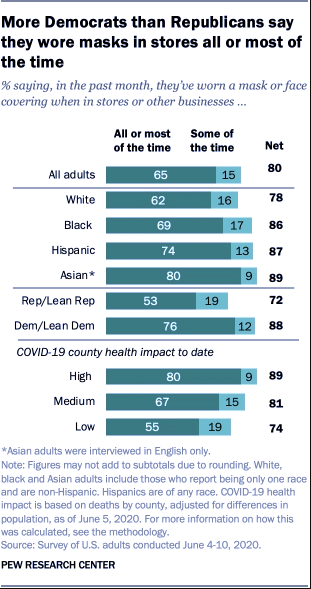
Throughout the COVID pandemic, politicians on different sides of the political spectrum have advocated for differing opinions regarding mask-wearing. When individuals see politicians they support to call upon a certain narrative regarding face masks, they can be more inclined to blindly follow that narrative instead of considering the reasoning behind the position. President Trump, although having changed in opinion, was quoted in April to have said, “I don’t think I’m going to be doing it, wearing a mask”. His dogged stance on mask-wearing can be linked to individuals on the political right participating in anti-mask protests and is a driving force in the divide between Americans. According to Pew Research, there is a 23% difference between Republicans and Democrats in terms of mask-wearing in public – 76% of Democrats compared to 53% of Republicans who wore masks all or most of the time. The desire to “go-against” others with opposing political views can be one of the reasons why individuals are refusing to wear masks.
Moreover, much of the controversy has been heightened by a lack of clarity in the media, and changing perspectives on the topic. Public health officials first made the argument that masks were unnecessary, but suddenly swapped positions when new research emerged. The shift in position led to many individuals distrusting the government; reluctant to immediately follow the mandates for masks. Given that the leading institutions have recommended polar opposite recommendations, many citizens felt a lack of trust in such opinions. However, note that the changing perspectives isn’t necessarily a fault within the institutions themselves but rather a part of the scientific process. The novelty of the virus meant, the WHO and NHS are unable to make conclusions guaranteed to be correct, and new evidence is bound to change the status quo . Additionally, media outlets had made the claim that mask-wearing doesn’t benefit the individual but only prevents transmission. Based on this logic, individuals either asymptomatic or naive about the pandemic decided against wearing a mask. With faulty information, many individuals decided that the risk-benefit analysis meant mask-wearing would provide little help while causing a nuisance and thus, decided against it.
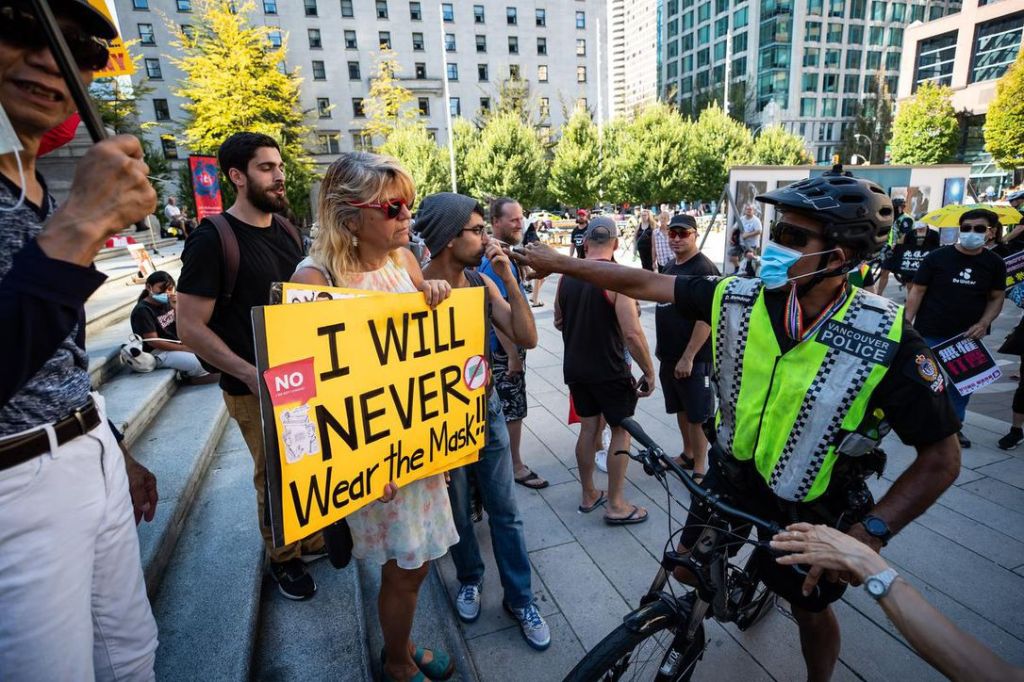
One critical argument that is dividing the political sphere is collective security vs. individual freedom. The basis for many anti-mask protests in the protest against restriction of freedom. Many individuals had already been quarantined for a significant amount of time and with the re-opening of the country, when they are told to wear masks, it’s as if the government is trying to dictate all aspects of their life. Citizens in all areas of trade have lost jobs (See Part 1 of Understanding COVID-19 for more information) and the mentality of such individuals can be much less rational. Hence, the combination of economic impacts, with political beliefs changes an individual’s willingness to wear masks. Whether we should value an individual’s choice to dictate their own life or to value protecting the masses has been a raging political question. The Constitution of many Western countries grants citizens the right to freedom, and hence, the argument can be made that individuals should decide whether they want to wear masks or not. Anti-mask protestors have cited such arguments and claim that governmental policies have restricted their inherent rights; taking away from human dignity and identity. Having to maintain liberal freedoms while dealing with a public health crisis can be extremely difficult for liberal democracy. Thus, it is natural to observe outcry and opposition when democracies take away individual freedom in favor of collection security.
Cultural Differences
In nations across the world, wearing masks is done for a variety of reasons. While in some nations the use of medical masks is seen as a common feature, others find it to be weird and unusual. The difference in opinion, and overall perception surrounding mask wearing is a source for the controversy.

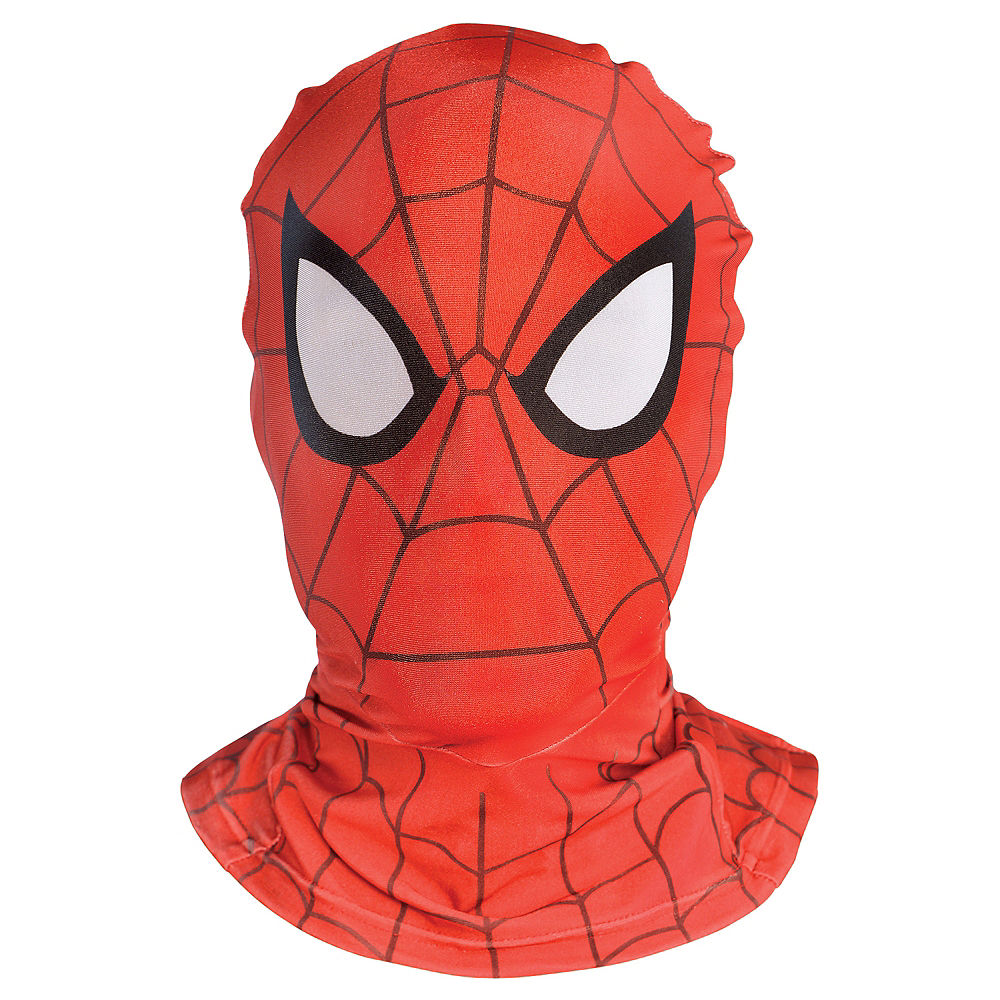
Right: https://www.target.com.au/p/spider-man-hero-mask/63142518
The image to the left is a picture taken in 2019, pre-COVID, in Japan. As one may notice, a significant number of individuals are wearing medical or surgical masks that governments have required citizens to wear during the pandemic. In many, East-Asian nations, masks are widely accepted as a public safety tool, and no one would question the act of wearing a mask. The culture of wearing face masks was a result of a combination of industrialization, natural disasters, and common courtesy. The 1923 Kanto Earthquake resulted in the destruction of over 600,000 homes; producing a sky filled with ash and smoke for a week. During this period, face masks were brought out to prevent the inhalation of harmful toxins and protect people from suffering negative health effects. Moreover, the industrialization of China, Korea, and Japan in the 1950-60s led to rampant air pollution, and citizens of these nations once again resorted to face masks as a method of protection. Although many of the issues surrounding pollution don’t exist today, the tradition of wearing a face mask has carried forward. In modern Asian countries, it is expected of an individual to wear face masks when they are sick. With a growing elderly population, catching the flu can have serious consequences, and hence, individuals wear masks to protect themselves and each other. The commonality of face masks in many of these nations makes the transition toward mask-wearing during COVID feel natural. Since there is already a pre-establishing cultural norm of wearing masks, mandatory mask-wearing doesn’t differ from what is “normal”.
In many European and North American countries, surgical masks are often only seen in the hospital room. Thus, when governments suddenly called on individuals to start wearing a face mask, many found the act to be uncomfortable and embarrassing. Masks, in these nations, represent a completely different image compared to many Asian countries. In nations like Japan, masks are seen as a common tool for protecting public health, masks in Western nations are often associated with fictional characters; whether that is a Marvel Superhero or a horror film villain. They are often portrayed as a tool for children’s dress-up games, and as adults, it can feel demoralizing to be associated with such a notion. Nobody wants to associate themselves as “childish” by wearing a mask. There isn’t a significant connection between public safety and mask-wearing, where individuals are comfortable enough to walk out of the house without worrying about public opinion. The lack of cultural acceptance can link to a bandwagon effect where people feel less inclined to wear a mask because others are not doing so. Therefore, even if one doesn’t notice a lack of incentive, the environment fosters a culture where mask-wearing isn’t as easy to accept.
Conclusion
Individual beliefs and cultural norms may influence an individual’s desire to wear a mask but don’t change the inherent benefit of masks. In multiple studies, masks have shown significant decreases in infection rates, and are critical to solving the health crisis. However, the willingness to wear masks is most definitely an issue that must be addressed if individuals want to return to normalcy. Proactive steps must be taken by advocacy groups and the government themselves to create a unified position on masks wearing. The flip-flop of positions takes away from the credibility of our institutions and only gives rise to more polarization in the media. Citizens should take an active stance to normalize mask-wearing and value scientific benefits over notions like appearance and public perception. At the end of the day, masks require one to sacrifice very little for a much greater benefit. Despite infringing on personal freedoms, the security it provides can be valued to a much greater extent.
For more information:
 The Lost Canadian