By: Kai Ma

If one were to get the majority of their knowledge on current events from social media posts such as the one above, the general gist of the ongoing Uighur crisis in China would be: the Chinese government is conducting a variety of unthinkably horrible practices including re-education camps and forced sterilization against the Uighur people due to their religious beliefs as Muslims. But is this actually an accurate depiction of the situation? Is it not true that other Muslim groups exist in China that are not facing this treatment? To understand the religious nuances of this situation, we must understand some facets of Uighur identity, Chinese religious policy, as well as CCP-Uighur relations.
Who are the Uighurs?
Uighurs (Simplified Chinese: 维吾尔, sometimes also spelled “Uyghur”) are a Chinese ethnic minority primarily residing in the Chinese autonomous region of Xinjiang. They are ethnically and linguistically distinct from the majority of China’s population, being more culturally and ethnically related to inhabitants of Central Asian countries than China itself. The Uighur language is related to Turkish, and, as highlighted by most media depictions of the current situation, most Uighurs are Muslims.
What does religion have to do with it?
Although the ruling Communist Party of China (CCP) stoutly supports state atheism, freedom of religion is technically guaranteed under the Constitution of the People’s Republic of China. In reality, the situation revolving around religious practices is far more complicated. The government only actually protects certain religious activity, which must be conducted through state-sanctioned religious organizations and take place at officially registered places of worship. Moreover, there are only five of these state-sanctioned organizations, pertaining to the practice of Buddhism, Taoism, Catholicism, Protestantism, and Islam. This implies that other religions, including Judaism, are effectively illegal, though enforcement around this particular policy tends to be relatively relaxed.
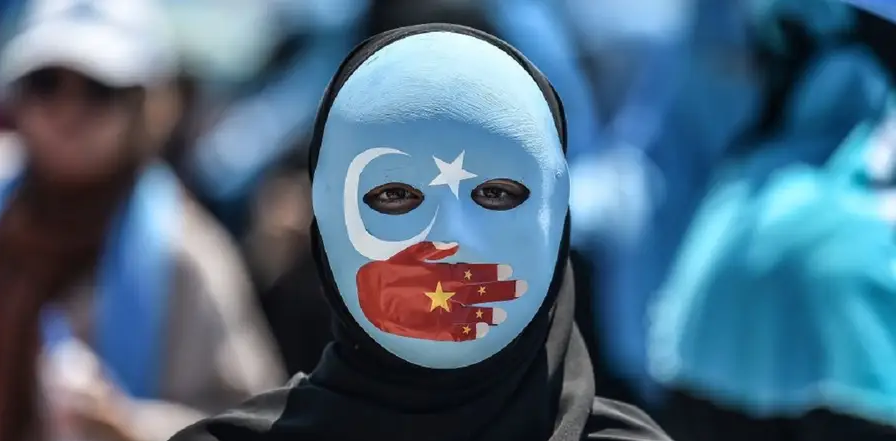
So if Islam is legal in China, and is protected by the Constitution, why are Uighurs facing discrimination for their religion? The important thing to note here is the necessity of government registration. While being Muslim is legal, it is only legal if and only if the appropriate administrative processes are completed. Uighur Muslims are not registered through the state-sanctioned religious organization pertaining to Islam, the Islamic Association of China, leading to discriminatory practices. Other unregistered religious groups, such as Tibetan Buddhists and the Falun Gong also face similar harassment. Therefore, it is not entirely fair to say that the Chinese government is expressly against Islam as a religion. Other Islamic groups practicing through the state-sanctioned religious organization, such as the relatively numerous Hui group, tend to experience less conflict with the government.
Are there other reasons why Uighurs are in conflict with Chinese government?
After reading the previous section, readers may be tempted to think that the problems plaguing the Uighur people have a relatively simple solution; in that religious discrimination against them from the CCP will cease once they register through the state-sanctioned Islamic Association. However, the current tension between Uighurs and the Chinese government, particularly in Xinjiang, concerns far more than that of religious discrimination. It can be difficult to identify each individual issue that is a part of the crisis as they are often intricately related to each other. However, there are some facets that can be identified. Most notably, the migration of the ethnic majority in China, the Han, to Xinjiang as a result of recent development projects has caused a significant loss of jobs for the Uighur population. Hence, the Xinjiang Uighur population suffers significant damage in their ability to acquire economic prosperity when job preference is given to the Han Chinese. This has understandably caused disgruntlement in the local Uighur groups..
As such, the current crackdown on the Uighur population can be partly attributed to civil unrest among the Uighur population due to these increased tensions. According to the government, numerous violent incidents and separatist movements supposedly instigated by Uighur groups have occurred in the past decade, including an attempted plane-hijacking in 2012 and a gang attack on a police station that left 96 dead. However, it is unclear if these reports of civil unrest are accurate. The Chinese government is famously tight-lipped about any subject that may incite controversy, and many view these reports of violent incidents as propaganda-like excuses to falsely justify religious and cultural discrimination.
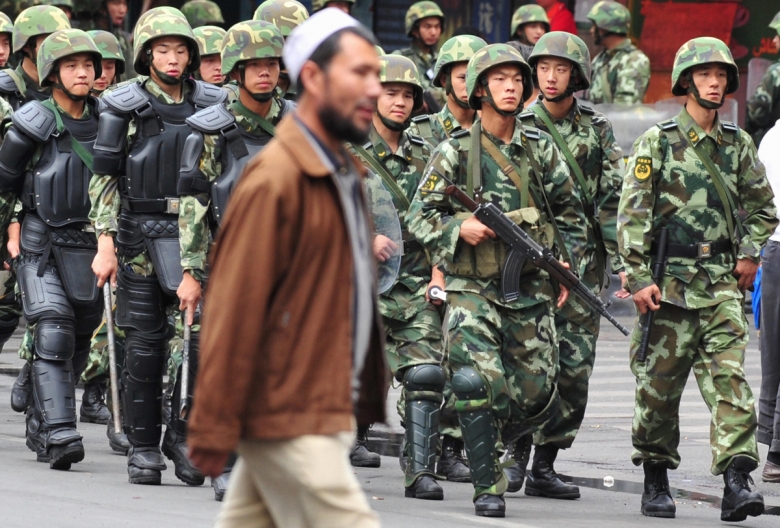
Furthermore, the region of Xinjiang, and the Uighur people as an extension, have begun to serve as a hinderance in the CCP’s economic development plans, namely the Belt and Road Initiative (BRI), which goes through Xinjiang. For the purposes of this article, the specifics of the BRI are not important; all we must recognize is that Xinjiang, which has a majority population of Uighurs, is geopolitically important due to its size (a sixth of China’s land mass) as well as its geographical position as a neighbour to eight countries, several of which are major players in world politics. As a result, the stability of the Xinjiang region is important to the CCP as an integral part of its plans for economic development, resulting in the perception of Uighurs as a threat to economic interests from the perspective of the CCP. When one region has control over the infrastructural development i.e. roads, they also have control over products that come in and out of the region. This therefore can influence trade and distribution of goods, which the CCP doesn’t wan’t the Uighur population to control nor disrupt. This was demonstrated in President Hu Jintao’s increased persecution of Uighurs after Uighur-led riots forced him to return to China from a G8-summit.
Are the depictions of the current Uighur crisis accurate?
That depends. From the experiences of the author, depictions of the situation, especially social media posts, tend to focus on the fact that the Uighurs are Muslim. While a portion of the undeniably horrific treatment of the Uighurs can certainly be attributed to their religious beliefs, accusing the Chinese Communist Party of religious discrimination against Muslims is a gross oversimplification. In truth, the situation is far more complicated, including aspects relating to economic prosperity and the nuances of Chinese governmental religious policies. While these oversimplified depictions are often inaccurate to some degree, they remain accurate enough to have some value in prompting further research by the people that see them, as well as serving as a call to action. Although blatantly accusing the CCP of outright religious discrimination at this point is unfair to some extent, there is definitely some truth in those allegations, and their current actions against the Uighur population are far too drastic to be justified as an appropriate response to civil unrest.
In a globalized, Internet-powered world, actions as drastic as those taken by the CCP are next to impossible to hide. The leaders of the CCP are not stupid; they know how their actions are perceived outside of their home country. Ultimately, we must acknowledge that there is a fundamental difference in worldview between China and the West. For the Chinese, the common good comes before individual rights, which are often perceived as a dangerous Western notion. From the Chinese point of view, the actions of the Uighurs are a threat to economic development and harmony, requiring intervention for the purpose of correction.
Edited by: Terry Tian
For Further Reading:
https://www.bbc.com/news/world-asia-china-26414014
https://www.vox.com/2020/7/28/21333345/uighurs-china-internment-camps-forced-labor-xinjiang
 The Lost Canadian